A Reflection on Opera

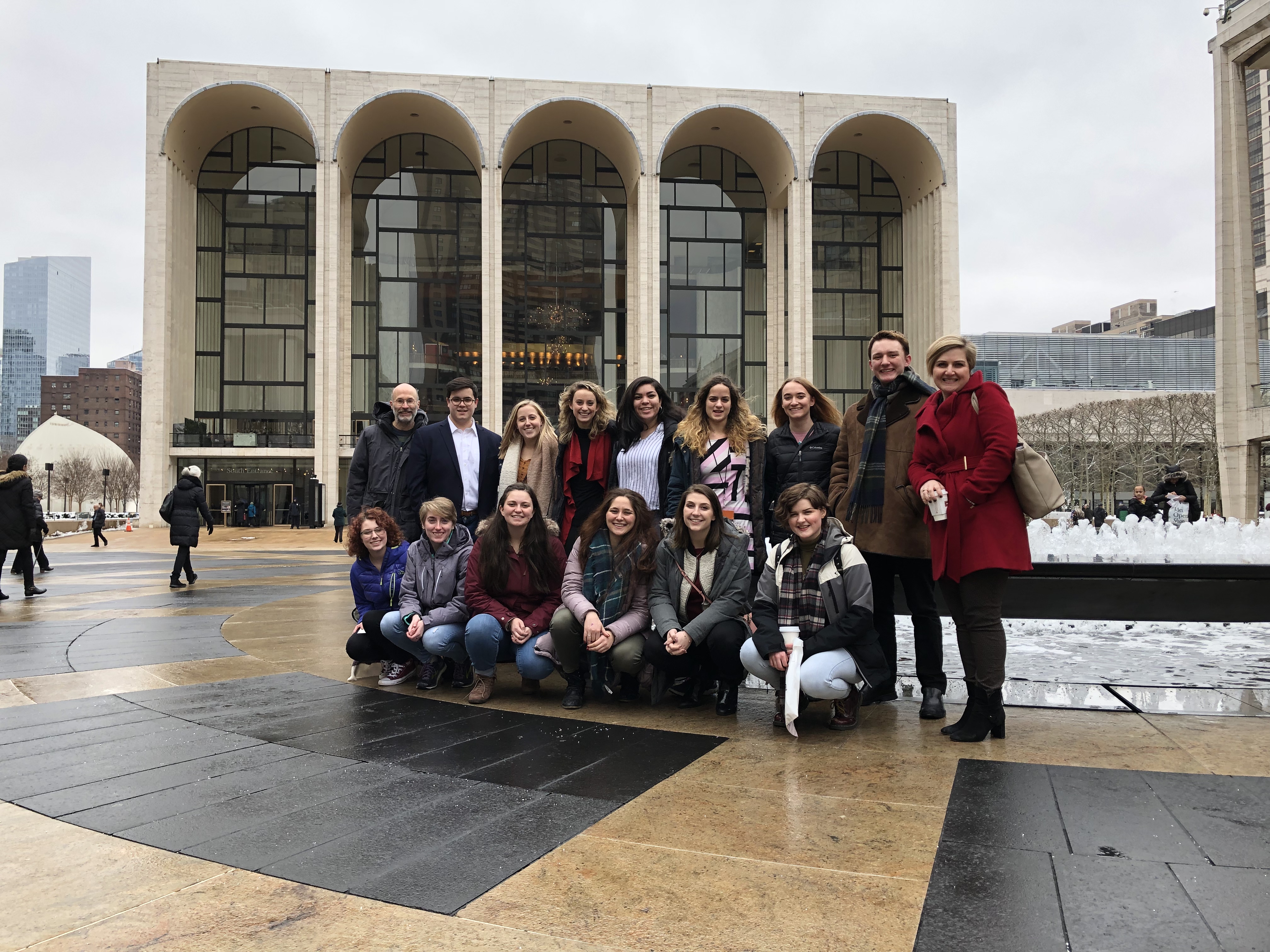
(Photo taken by Random NYC Man)

Ah mes amis! We have reached the end of our operatic journey together. As I sit here and reflect on where I was at the start of this semester to where I am now, it’s obvious to me how much operatic knowledge and appreciation I have accumulated over the course of the past few months.

When I first walked into Whalen 2330 in January, I was merely a Health Science major in a room full of strangers with no opera knowledge or experience whatsoever. Although I can’t necessarily say that I have fallen in love with the operatic craft, I can absolutely say that I have gained more of an appreciation for the creativity, talent, and beauty that are combined in these performances. I am able to hear an operatic piece and listen to the music rather than the lyrics. I am able to sympathize more with the characters. I am able to feel something more than confusion or indifference when I hear an aria. My perspective on opera has definitely transformed, in that I can now consume opera with a knowledgeable and experienced mindset.

Because I hadn’t had exposure to an opera prior to this class, I was excited — to say the least — to have the opportunity to be an audience member at the Metropolitan Opera House. If I wanted to see an opera, what better way do it than at one of the most prestigious opera houses in the world? The building itself was stunning, and the entirety of Lincoln Center was absolutely incredible: so much talent and art shoved into one concentrated area in New York. Although our seats weren’t the best, I actually thought they were perfect. From our row, I was able to not only watch the opera, but watch the orchestra, see the architecture of the room (those chandeliers were insane!), and see the reactions of the other audience members. Ultimately, my seat provided that perfect view to see the Opera House as a whole, rather than just the performance.

The show itself was incredible. Although I wished I hadn’t watched La Fille du Regiment online beforehand, it was astounding nonetheless. The performers were nothing less than incredible, but Marie definitely impressed me the most. The way she was able to hit outrageous notes with such ease, all the while staying in character and doing different actions around the stage simply took my breath away. I was impressed when hearing video recordings Marie’s arias, but it was nothing compared to hearing those arias live. My mom has a name for rare celebrities that have genuine talent that isn’t merely hyped up by society: she calls them the “real deal”. The woman playing Marie was without a doubt the real deal.

Aside from the performers, I enjoyed seeing the opera live. Most of the show was very similar to the tape we watched on Sakai, but the aspect of being live was much more enjoyable to watch. It’s obvious that there are different stylistic vocal and acting choices that every actor does different. I liked being able to know that those actors were putting everything they had into that performance, and that (almost) every audience was engaged in only the show. Additionally, I liked that the actors did not have microphones. I was worried I would spend a lot of the opera straining to hear the performers from our seats in the back, but every one of their voices carried throughout the entire room. I think the lack of microphones made the performance more authentic.

Although I did enjoy the performance tremendously, there were a few aspects that I did not enjoy that much. For starters, although I love listening to the vocalists sing, I don’t like that the show is very redundant in regards to the lyrics and the music itself. There were many parts such as Marie’s aria that were incredibly repetitive and I found myself zoning out. Also, I understand that it’s necessary that the characters exaggerate their lines and blocking; when I was watching the opera online, I was bothered by those exaggerations but it was easier to understand the necessity of them when watching it live in a room that large. However, I thought some of their reactions were a bit too dramatic and forced that it took away some of the authenticity for me and thus distracted me from the plot. However, these aspects did bother me enough to dislike the opera, as I left the opera house feeling very impressed nonetheless.

Aside from La Fille du Regiment itself, I had a great time people watching at the opera house and Lincoln Center in general. It’s obvious that there were a lot of audience members there that — like us — were simply there for the occasion of seeing the opera. However, there were also a few people I observed that were definitely part of NYC’s 1% — they were decked out in their pearls and fancy hats. I wouldn’t be surprised if those higher class individuals had season tickets and saw the opera as part of their weekly routine. It was entertaining to see the vastly different social classes present for that performance of the opera; all of us joining together for one afternoon of watching pure talent.

Ultimately, I came into this class being very ignorant of the operatic craft. However, in reflection, I realize that I am leaving the class being a much more experienced opera consumer, and I have gained several great friends (and professors!) that I am able to have intellectual conversations with to further cultivate our curiosity. Although I wouldn’t necessarily call myself a lover of opera (yet!), I have definitely gained more of an appreciation of the art form.
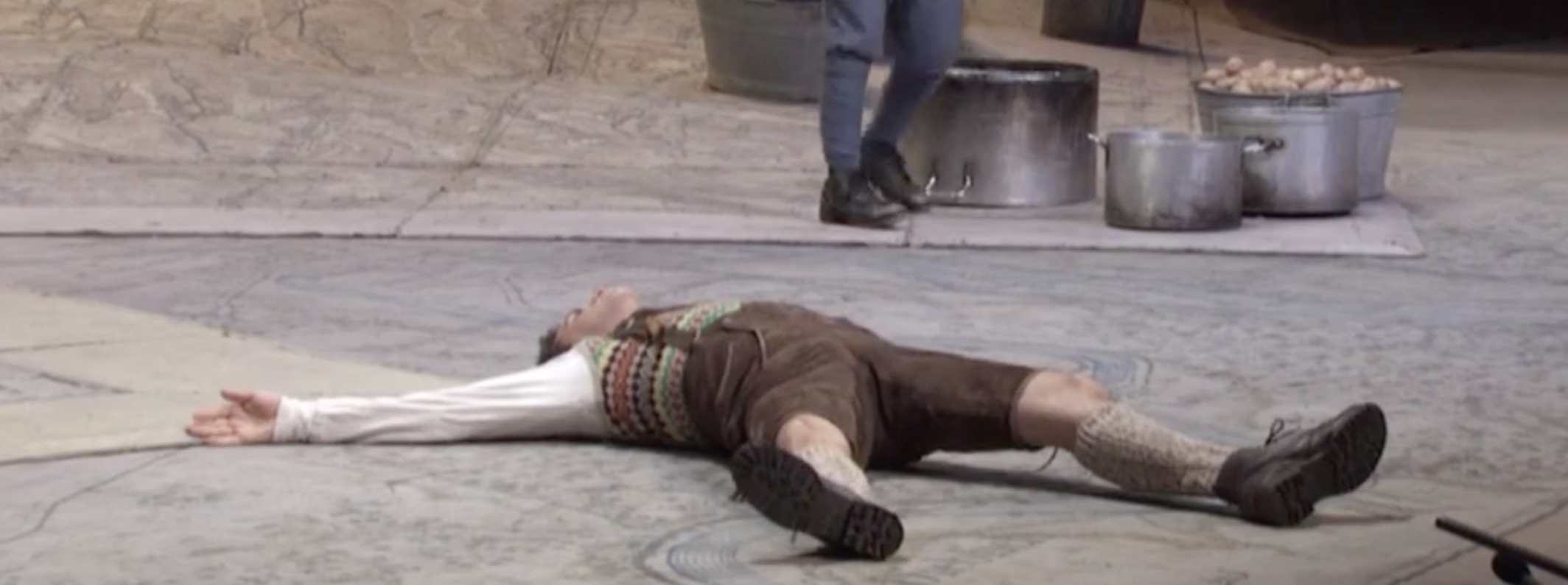
Marie & Tonio: A Sexual and Social Analysis of Relationships

(Photo taken from La Fille du Regiment at the Metropolitan Opera)

In the past, we have looked at individual aspects of La Fille due Regiment — Tonio’s 9 high Cs in “Ah mes amis”, a close examination of the motives behind the Marquise of Berkenfield’s actions, and more. In this post, however, rather than analyzing singular components of the opera, we are going to get a closer look at how some of those components collaborate and combine in order to get a better understanding of La Fille Du Regiment.

When we look at relationships and their dynamics, we often inspect the characteristics of each individual and observe how those characteristics coincide with the traits of their partner. As I analyze the relationship between Marie and Tonio from La Fille du Regiment, I recognize the individual traits of both Marie and Tonio, and consider how those traits have influenced the nature of their relationship.

La Fille du Regiment takes place in Swiss Tyrol in the early 19th century during the Napoleonic Wars. During this time, the patriarchy was incredibly prevalent and women held little to no power in government and in society. It was natural and expected that a man would hold the power and authority in a romantic relationship, and the woman would merely do what is expected of her.

Tonio and Marie’s relationship, however, is a little unorthodox in terms of dominance. Since the start of the relationship, Tonio made it very apparent that he was head-over-heels in love with Marie. Marie, on the other hand, played hard to get and established a facade of indifference. Although she is in love with Tonio — and eventually confesses it — she is initially on the receiving end of admiration. I call this dynamic unorthodox because although today this relationship wouldn’t be out of the ordinary, the time period of the opera makes this relationship quite unusual. Whereas Tonio would typically hold the authority, Marie evidently has Tonio wrapped around her finger and controls the relationship on her terms; she holds the power despite her sexual status. It’s interesting to consider the sexual nature of this, and the unconventional aspects of it. Personally, I love the concept that women can have just as much — if not more — control and authority in a relationship in order create a balance. I believe that an ideal relationship is similar to Tonio and Marie’s: one where a woman can openly speak her mind and not feel inferior to her partner.

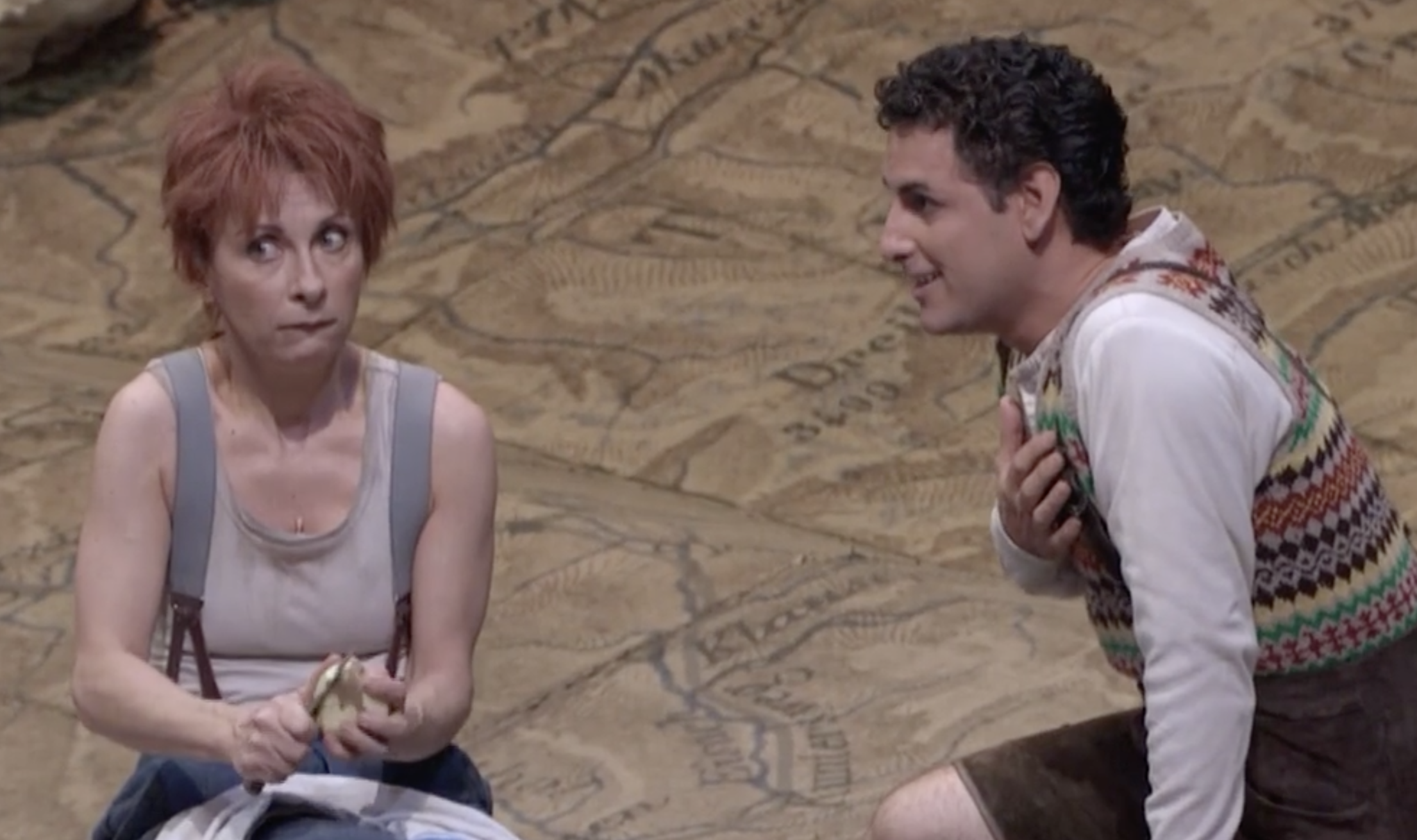
The unique nature of this relationship is accurately illustrated halfway through Act I in Tonio and Marie’s duet “Quoi! vous m’aimez?”, in which Marie is essentially asking Tonio to prove his love for her while she disinterestedly peels a potato. This song perfectly captures the comedic unconventionality of their relationship. Despite the fact that Marie is a woman, Tonio disregards all gender expectations to pursue her: he even gets on his hands and knees to beg for her love. When I first heard this song, I found myself laughing at how ridiculous the dynamic of their relationship was, yet I was charmed by how dedicated Tonio was to winning over Marie’s heart.

Musically, the song represents their relationship as well. Whereas Marie disinterestedly sings staccato notes in a lower range, Tonio’s lyrics are much more dramatic and legato; he even reaches a few higher notes in an attempt to impress the Marie. Also, the song has many tonal changes: sometimes the orchestra plays chords with a more romantic tone and sometimes it plays a more humorous and effortless tune. This represents the ever-changing dynamic of Marie and Tonio’s relationship. Ultimately, it’s evident that the song demonstrates the roles and feelings of each character in their complicated relationship.


(Photo taken from La Fille du Regiment at the Metropolitan Opera)

In addition to the sexual components of their relationship, Tonio and Marie have a unique set of social circumstances as well. For the majority of the first act, the two lovers are in the same social class: the lowest. As a servant for the army and a women, Marie perhaps holds the lowest position in the hierarchy in this show. Tonio, as a foreigner and seemingly not belonging to any group, also possesses a low social status and is right there next to Marie in the hierarchy. Therefore, in the beginning of the show, their relationship is more practical . However, after Marie realizes her true social class as well as her potential for social mobility, their relationship starts to get a bit more complicated. Although Tonio moves to the lower middle class after moving up in the ranks as a soldier, he still has no power, authority or potential for social mobility. Analyzing Tonio and Marie’s relationship is the second act of the opera is much more unique. Although the Marquise wants Marie to marry the Duke of Krackenthorpe, Marie continues to desire Tonio’s love — despite their drastically different social circumstances. Now in addition to having an unorthodox relationship in terms of gender norms, the two have an unorthodox relationship in terms of the social hierarchy.

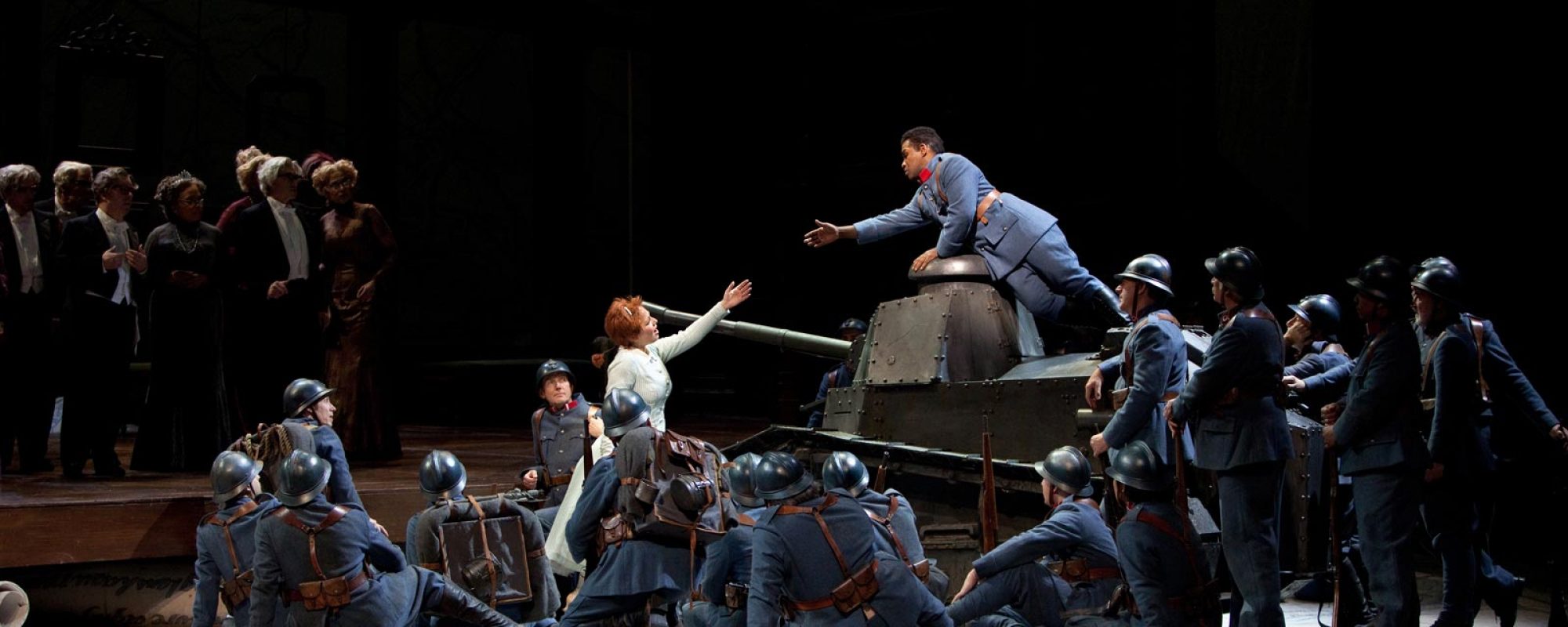
Their social relationship a bit more complex, however, due to the nature of their hierarchical positions. It’s obvious from the start that Tonio is helplessly in love with Marie. However, it’s interesting to consider if Tonio had some alternative motive in the second act; perhaps he continued to pursue Marie more intensely because she now had the potential for social mobility, and Tonio — as her partner — would have more power as well. He even goes to the extent of bringing a tank in to stop her from marrying the Duke. I am not doubting Tonio’s love for Marie; I am merely considering that his love might be laced with hopes of a higher social status.

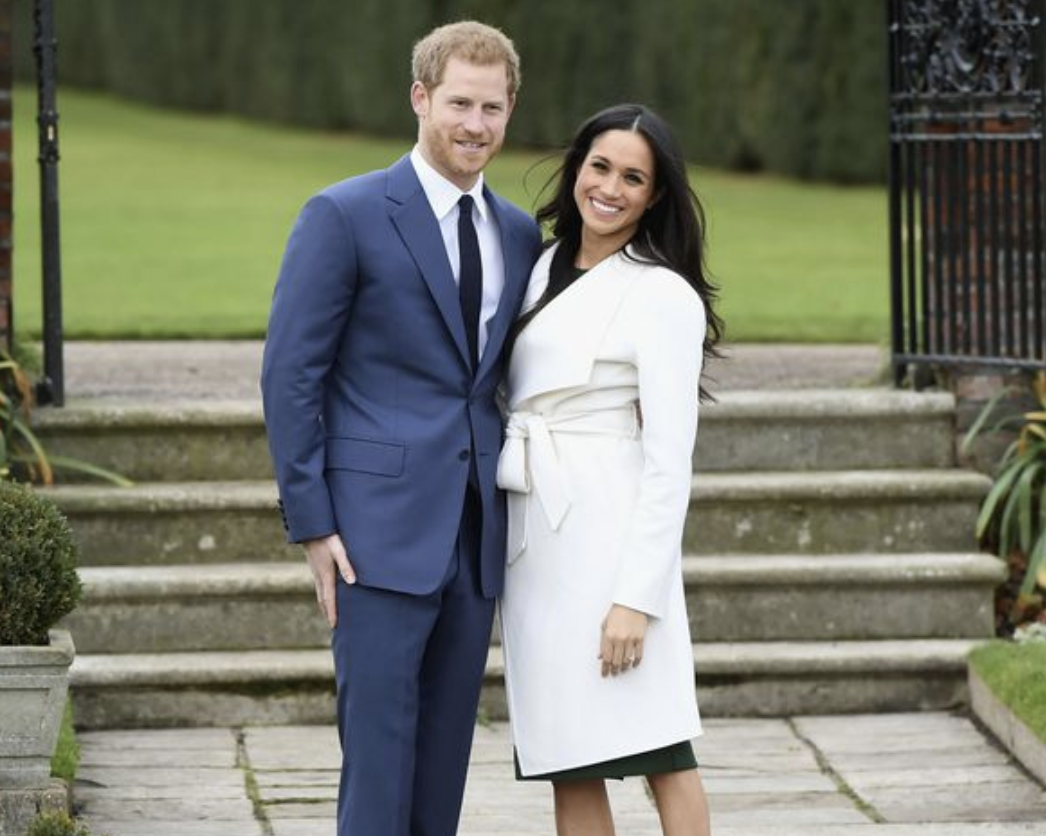
There are several modern day parallels for this type of relationship, especially considering how much power women have gained in society over the past decades since this show was set. Leaning more towards the social status aspect of their relationship, I think of the relationship between Prince Harry and Meghan Markle. Prince Harry, who obviously grew up in a life of royalty, married Meghan Markle, a native from Los Angeles. Although Markle was by no means a modern day “peasant”, she did not come from royalty. Because it is typical that marriage — especially in the higher classes — stays within that class, it was shocking to the public that Prince Harry chose to marry someone from a non-royal family. There are obvious parallels with this specific relationship and La Fille du Regiment, in which Marie — like Prince Harry — chose to marry a lower class man despite their vastly different social statuses.

(Photo taken from “Good Housekeeping”; https://www.goodhousekeeping.com/life/relationships/a47735/prince-harry-and-meghan-markle-matchmaker/)

It is relationships like these that prove that in some cases, people like Marie and Tonio do marry solely for love, despite all the societal expectations.

Marquise of Berkenfield

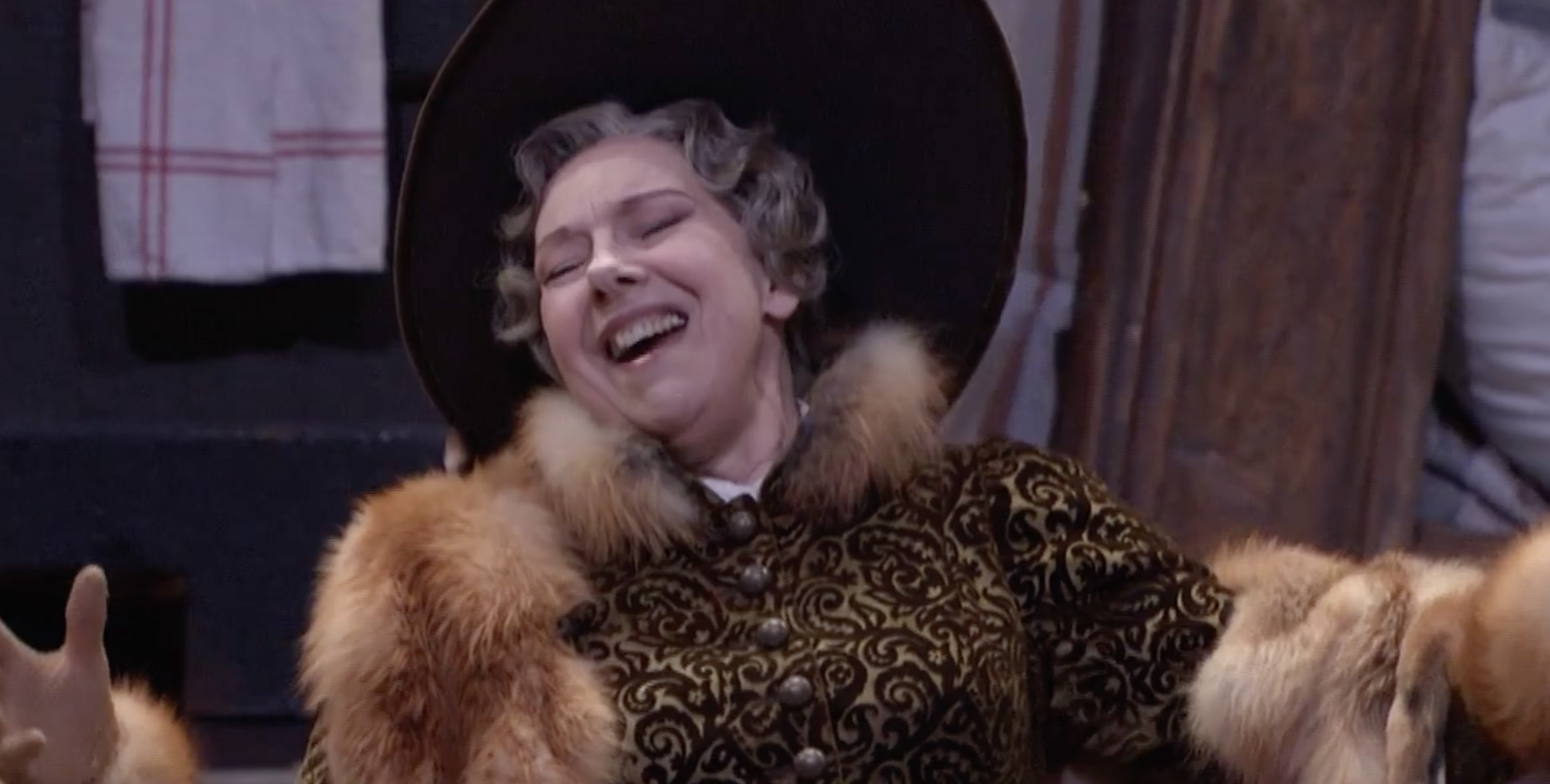
(Photo taken from La Fille du Regiment at the Metropolitan Opera)

After watching the entirety of La Fille du Regiment at the Metropolitan Opera House, I am once again struck by the level of talent and quality of performance exuded by these vocalists. I find it absolutely extraordinary that someone could possess the stamina, dedication, and talent that these performers repeatedly put into this show.

Because there is a small cast of primary characters in this opera, it is easy to identify each character’s values and quirks, and how those values may evolve throughout the show. A particular character that stuck out to me, however, is the Marquise of Berkenfield and the exceptional dynamism of her character throughout the course of the opera.

Although there was obvious character growth within most of the characters, it seemed to be on a slightly smaller scale compared to the Marquise. Marie’s love for Tonio and the Regiment was consistent. Tonio’s dedication to win Marie’s hand in marriage — although admirable — did not waver. The Marquise, however, experienced almost a complete 180° turn in terms of her values, insecurities, and willingness to make sacrifices. As an audience member, I found it fascinating to observe and analyze that 180° spin, and the overall course of her growth.

In the very first scene of the opera, we really get a feel for who the Marquise is and what she values most — her pride. Her behavior with the townspeople in her aria “Pour une femme de mon nom” demonstrates that she is concerned with the the public’s perception of her. For example, she continuously brags about her nobility and beauty, all while singing many exaggerated high notes. Based on her long fur coat, exorbitant hat, and tendency to notice who is watching her, it’s obvious that she thrives off attention. Despite her boisterous attitude, however, her actions, appearance, and lyrics were laced with undertones of insecurity and her fear of judgement. She even goes to the extent of lying about her relationship to Marie to Sulpice, because she had her out of wedlock and is afraid of feeling inferior because of it. Seemingly, the Marquise is determined to maintain a perfect appearance to to maintain her social status as a woman of higher class.

The Marquise’s obsession with appearance extends to her daughter’s appearance as well, demonstrated by her horror of Marie’s improper behavior. She is alarmed by Marie’s swearing, posture, and overall presentation; this leads to the Marquise stealing her away from the regiment in order to make her a “proper lady”. It’s obvious the Marquise is under the impression that society will not accept a women that does not act as a women should. Therefore, in the noble women’s eyes, Marie serves as an obstacle to the Marquise’s goal of maintaining a polished presentation. In addition, she wants the Duchess of Krackenthorp to allow her son to marry Marie, meaning Marie must start acting like a lady to impress her. Ultimately, she aggressively continues to try and make Marie something she is not in an attempt to increase her social standing.

Furthermore, her attitude towards Tonio was initially disgust and condescension; she exclaims that the thought of Marie being involved with a solider makes her “blush with shame”. This is yet another example of the Marquise prioritizing her own pride over Marie’s ultimate happiness. Because she believes that he is not worthy of her daughter’s love, she won’t allow Marie and Tonio’s relationship to continue — despite the fact that Marie expressively reciprocates Tonio’s love.

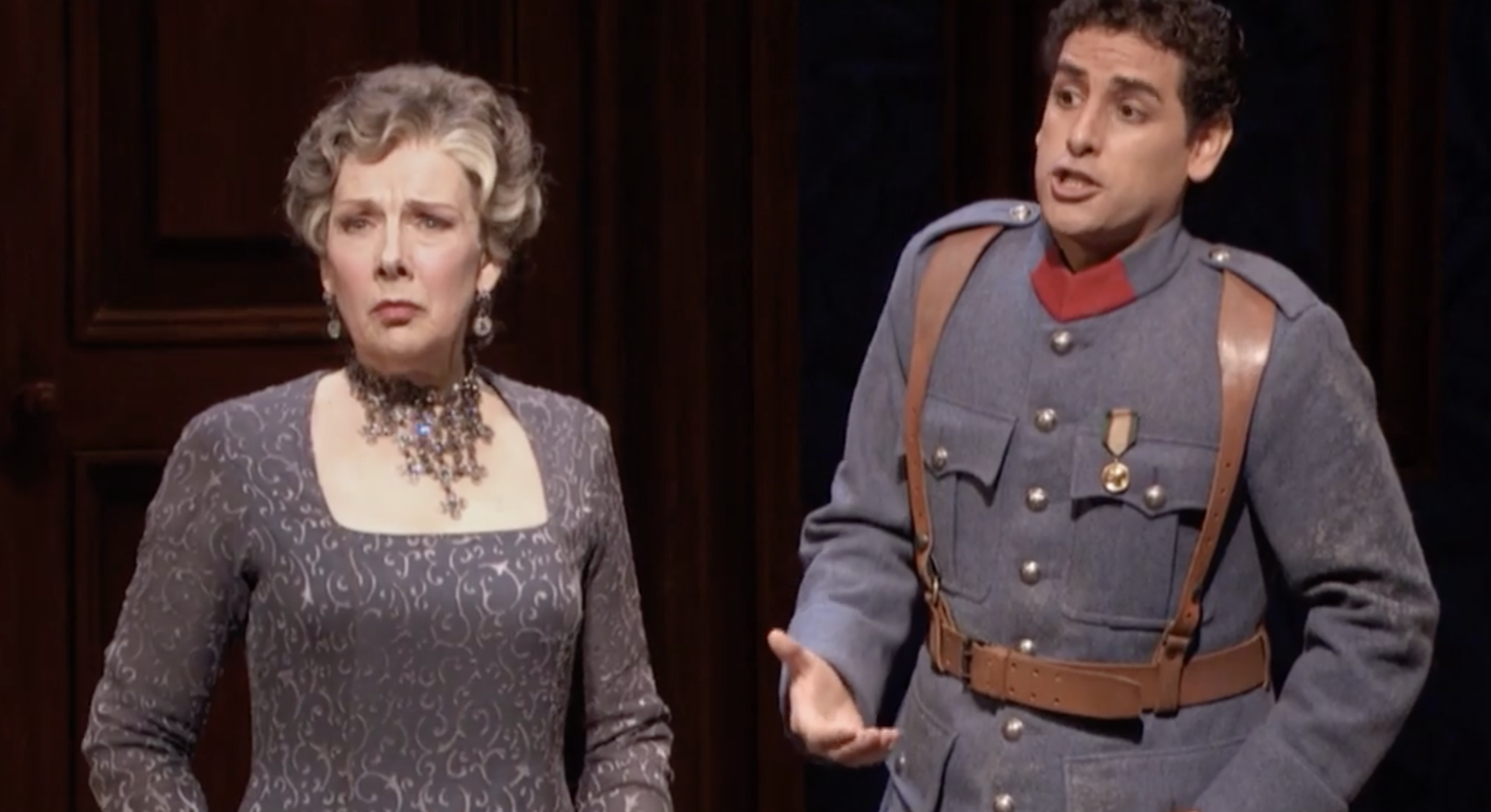
One of the first times we see a crack in the Marquise’s perfectly kept appearance is her reaction to Tonio’s aria “pour me rapprocher”. Her facial expressions illustrate how moved she is by his serenade and his undying love for Marie. Unfortunately, she conceals this chip in her facade by verbalizing her overwhelming disgust and throwing the soldier out. On a subconscious level, I think this act of aggression is less so towards Tonio, however, and more so towards herself. I think the Marquise is trying to conceal her own compassion by convincing herself of the importance of appearances. Furthermore, this self-consciousness is heightened in the presence of the Duchess. The concept of wanting Marie to marry the Duke of Krackenthorp is a bit complicated; although that want is fueled partially by her wanting Marie to have a secure and comfortable future, it has underlying tones of selfishness in desire to gain more wealth and power for herself. Again, we see that the Marquise has her priorities extremely mixed up. Personally, I believe that the Marquise is somewhat disoriented by Marie and Tonio’s relationship because through her life of aristocracy, she has grown up with the idea that marriage is simply a means to contain power and wealth in the higher social classes. She simply doesn’t understand that Marie doesn’t hold the same values.

(The Marquise’s emotional response to Tonio’s declaration of love for Marie in La Fille due Regiment at the Metropolitan Opera)

We finally see the Marquise reveal compassion when she witnesses Tonio stop the wedding and profess his overwhelming love for Marie — with a tank, nonetheless. This seems to be what finally cracks her facade and fear of judgement, and she expresses her apologies for trying to control Marie’s life. She states (in French), “how you’ve suffered, dear Marie, and all for me”. The Marquise allows Marie to marry Tonio, and her apparent priority change is confirmed by one phrase that she states at the end of the opera: “Enough of pride!” This proves her acknowledgement that relationships shouldn’t be determined by social status, but rather love in its truest form.

The Marquise’s character growth is demonstrated through her vocal disparities among songs through the opera as well. In the first song, her lyrics are elongated, almost dramatized in her performance. This parallels her desire for attention and a perfect appearance. However, her voice changes towards the end of the opera. Although she still sings in her mezzo-soprano range, her songs are more simple and less exaggerated after she admits to Sulpice that Marie is her daughter. This exemplifies her diminishing concern with society’s judgement and her appearance at the end, and further proves that the character’s level of compassion has evolved throughout the performance.

Although we all resemble the Marquise sometimes, — through our selfishness and fear of judgement — it’s important that we recognize the importance of compassion and love, and acknowledge that appearances aren’t always as important as they seem.

Sull’aria & The Shawshank Redemption

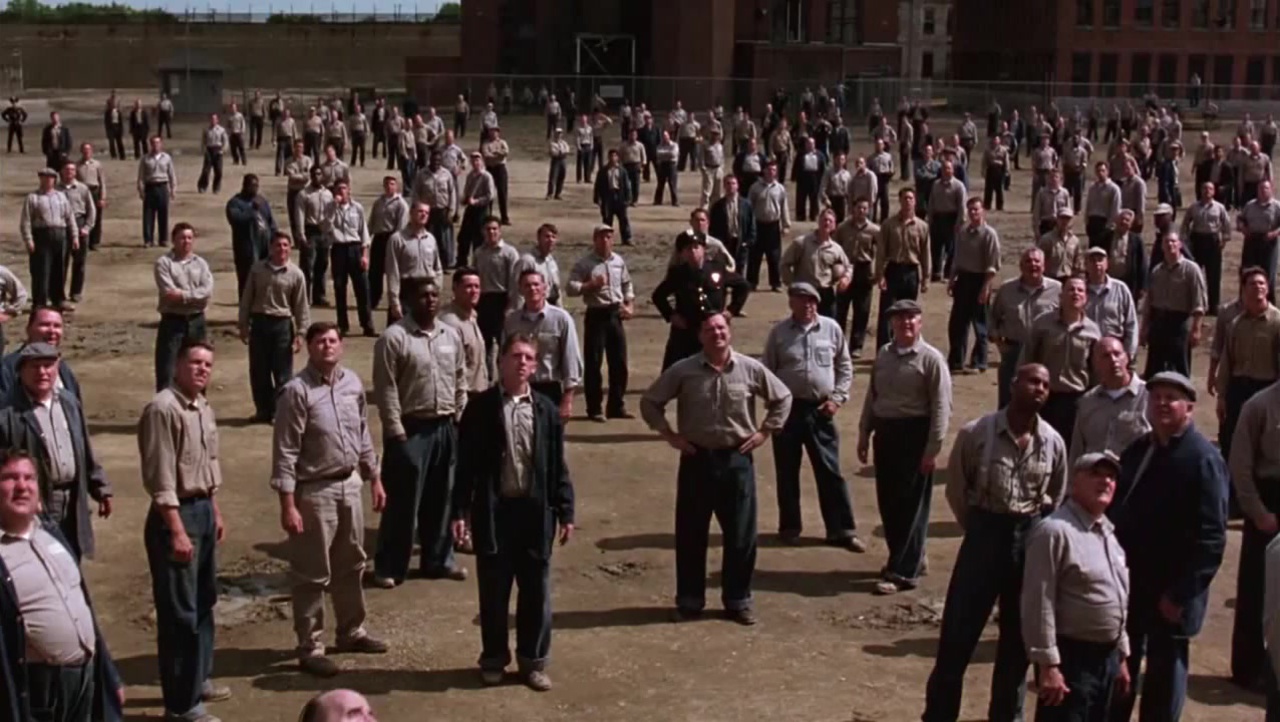
Image from The Shawshank Redemption (1994). Directed by Frank Darabont.

As I watch this operatic scene from The Shawshank Redemption once again, I am brought back to those initial feelings I’d had when I had first seen the movie — empathy, hope, a sense of humanity. Although watching this particular clip on its own is indubitably moving, it means so much more in context; seeing how this scene contrasts with the tragedy and turmoil that encompasses the other scenes of the movie demonstrates how touching this scene is for the prisoners: just for this singular moment in all their years stuck in the prison, they feel — as Red words it — “free”.

There’s a noticeable shift that occurs when Andy plays the aria for the camp; it’s one of his first acts of rebellion, making us think that it must’ve been something he thought was worth the consequences. His punishment was two weeks in the hole — a dark room of solitary confinement — but he describes it as “the best time he ever did”. It’s obvious that the other prisoners were afraid to admit how moved they were by the aria — perhaps out of fear of seeming feminine. However Andy recognizes the true power behind a singular song:

“Here’s [the prison] where it makes the most sense. You need it so you don’t forget — forget that there are places in the world the aren’t made out of stone. That there’s something inside that they can’t get to — that they can’t touch. It’s yours.”

Although it’s obvious that Andy tacitly understands how the aria must have affected the other prisoners and guards, the impact was also quite clear on their faces. Every person at the prison stopped what they were doing to listen to that operatic song; for that one moment, there were no guards, no prisoners, no warden. There was simply them and the music, a universal bond among people. Red even admits that he has “no idea to this day what those two Italian ladies were singing about”; however, in that moment, it didn’t matter. Those prisoners were perfectly content with the aria in its most basic form.

I do wonder, however, if the translation was in any way connected to the experience of the prisoners. I’ve discovered that Sull’aria is a duettino in Le nozze di Figaro between a servant (Susanna) and the Countess, in which the two work together to plot against the Count, in order to expose his infidelity. On the surface, it’s difficult to see how this situation could relate to the circumstance of the prisoners of Shawshank. However, when reading the lyrics and situation more closely, there are a few distinguishable parallels.

For starters, there is the obvious inferiority complex. Because the opera premiered in 1786, there were obvious gender norms and expectations established by society in which the hierarchy stated that women did not hold the same power that men did. However, in Sull’aria, the two women evidently attempt to outwit the male characters, thus proving their cleverness and stealth. The english translations discuss the women trying to “catch him [the Count] in our trap” which was an extremely risky move for women during that time period. When applying this inferiority complex to the movie, we see that there is not only a societal but legal hierarchy established at the prison, in which the prisoners are at the bottom of the pyramid. Perhaps on a subconscious level, this song is source of inspiration for the prisoners to give them hope that rebellion is not as impossible as they think. Perhaps the risks of Susanna and the Countess sparked a sense of rebellion within the prisoners. Maybe Andy Dufrey’s risk to play to music was a sign that they too have the ability to take risks against the guards and ultimately outwit their superiors.

Secondly, there’s the concept of an unlikely bond. The improbable friendship that developed throughout the song between the Countess and Susanna over their shared goal to expose the Count parallels the unlikely bond that forms between the prisoners and the guards over the aria. Because hearing the song momentarily exposed a bit of their soul, every individual at that prison is connected by collectively baring their own humanity — even just for a moment. We see in the clip, that the guards that were previously attacking and scolding the prisoners have united with them in an attempt to soak in as much of the music’s beauty as possible.

Additionally, the thematic idea of illusion is present in both the duettino and the movie, although the concept takes different forms in each. In the aria, although the music is beautifully eloquent and seemingly heart-wrenching, the lyrics imply a scheme in the works. Therefore, the beauty behind the lyrics has underlying tones of illusion and deception. This same illusion is apparent in the scene in The Shawshank Redemption. Although the men were momentarily bonded by the feeling of being “free”, that feeling was merely an illusion. When the song was cut off by the warden, the prisoners were forced to return to reality and their lives of brutality and hopelessness. Therefore, Red and the other prisoners were deceived by a glimpse of hope in their never-ending dungeon of despair — both literally and metaphorically.

Although Red states that he “[doesn’t] want to know” what the aria’s lyrics meant, there is a possibility that he and the other prisoners knew exactly what they were listening to on a subconscious level. It’s difficult to say whether I myself would want to know the meaning behind the opera if I were in their shoes. Maybe the music in its most pure form was all they needed to persevere for a little longer. Maybe that single song was what got most of those prisoners through the next few years at Shawshank. And maybe that glimpse of hope that we as humans hear in music everyday keeps us going for just a little bit longer.

The Operatic Tenor

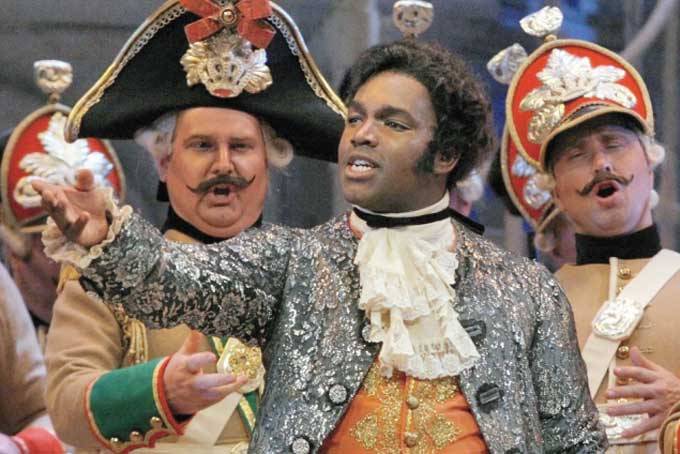
Photo: Lawrence Brownlee (supplied by Lawrence Brownlee) https://newpittsburghcourieronline.com/2015/06/18/opera-singer-brownlee-wows-world-audiences-with-his-voice/

“A mes amis” from Donzietti’s La Fille du Régiment has proved itself as both an impressive and moving aria within the opera. As I interpret the piece, “A mes amis” is, in essence, a proclamation of love. Although the song is evidently somewhat ostentatious, the context of it is pure.

Musically, the piece is seemingly vocally difficult; I understand why only particular tenors are able to sing the song successfully. It contains many vocal runs, constantly changing tempos, and obviously the several high Cs. However, although the high Cs are obviously the main contributors to the song’s “showiness”, the song is generally in a higher range for men. Additionally, there are many longer notes which requires a lot of breath support. Lawrence Brownlee’s rendition of “A mes amis” demonstrated his extensive breathing technique, and his habit of holding out the higher notes longer than needed proved how talented he truly is. However, in a theatrical context, the aria’s flashiness was emphasized even more. In my personal opinion, I thought Juan Diego Florez’s performance of “A mes amis” was even more impressive because it was within the context of the opera. Compared to the songs that were more conversational in the opera, it’s easy to see how this tenor piece could be a show-stopper. Additionally, the song takes place within the first act, and it seems that it would be challenging for a performer to sing such a vocally difficult piece so early in the show.

As I stated earlier, this piece is essentially Tonio’s proclamation of his love for Maria. Even more than that, it is his attempt to convince the regiment — and himself — of his worthiness, and to give him Maria’s hand in marriage. Therefore, it is understandable that this tenor solo would be showy because he is trying to prove something to the other men and to himself. Ultimately, I think this specific aria reflects Tonio’s courageous and persistent attitude, as well as his admirable passion for love. Shockingly, I enjoyed this particular aria very much. The only arias that I had been exposed to before this course were soprano arias and although I thought they were beautiful, they didn’t move me as much as “A mes amis” — specifically Lawerence Brownlee’s performance. I’m not sure if I’m drawn to solely “A mes amis”, or I am simply more fond of operatic solos in the tenor range.

It’s difficult to compare this aria to other genres because it is so unique stylistically. One artist that does come to mind, however, is Jason Derulo, a pop artist that is known for typically singing in a higher range. Although, the operatic tenor songs are most chesty and more masculine in my opinion, Jason Derulo’s music reminds me more of the Castrati pieces we listened to in class. However, I’m not particularly fond of Derulo’s voice. I enjoy the sound and tone of belting voices rather than falsettos; I think they have more power behind them. In most of Jason Derulo’s songs he sings in his falsetto for the greater portion of the song and I’ve always thought it sounded somewhat whiny — for lack of a better word. For example, Derulo’s song “Want You to Want Me” features the artist singing most of the song in what sounds like an auto-tuned version of him whining (although he does flip into a chestier sound for the chorus). However, I do admit that he is still able to sing those notes fairly well in a live setting, which demonstrates that he has good control over his voice. I don’t meant to sound harsh in my critiques, but I just simply enjoy the darker tones of the operatic genre and the chestier voices present in the renditions of “Ah mes amis”.

Overall, I found “A mes amis” significantly more impressive in terms of vocals and musical technique than any of the male songs we hear on the radio today. Although I wouldn’t go to the extent of saying I enjoy these arias more than modern day music, I do appreciate the technique of the operatic tenors I’ve been exposed to thus far. Admittedly, I’ve enjoyed researching and listening to the tenor operatic solos more than I expected I would. Because my opera knowledge is severely lacking, I’m looking forward to learning more about the varying aspects of the operatic genre — both past and present.

Jason Derulo’s “Want You To Want Me” (2015)

Jason Derulo’s “Want You To Want Me” (Live 2018)